If you are thinking about moving up in Concord, you are likely asking the same question many local buyers are asking right now: is this still a market where you need to rush, or is there finally room to be more selective? The answer is both. Concord single-family homes remain supply-constrained, but the market is no longer behaving the same way at every price point. If you understand where competition is strongest, where buyers have more leverage, and how style and carrying costs factor into the equation, you can make a smarter move. Let’s dive in.
Concord Market Snapshot
Concord’s single-family market is still tight by normal standards, but spring 2026 brought a meaningful shift in tone. In late February, there were just 13 active single-family listings, with a median price of $2.6 million and an average of 10 days on market.
By mid-April, active inventory had climbed to 38 homes, and months of supply rose to 2.59. Homes were still selling at an average of 102.99% of list price, which shows that well-positioned properties continue to draw strong offers even as buyers become more selective.
Over the longer term, the pattern is even clearer. According to the Town of Concord’s 2025 market report, annual single-family listings taken fell from 328 in 2019 to 253 in 2025, while average sale price rose from $1.33 million to $2.14 million. During that same period, average days on market dropped from 82 to 46.
That combination matters if you are moving up. It tells you that Concord has not become an easy market, but it also suggests that strategy matters more now than simply showing up prepared to bid aggressively on every home.
Why Price Band Matters Most
One of the most important things move-up buyers should know is that Concord is not behaving like one single market. It is more useful to think of it as several smaller markets divided by price.
Because Concord is a thin market, monthly data can swing sharply when only a handful of listings or sales change. In a place like this, price-band behavior often gives you a better read than one headline median.
Under $2M Is Still Very Tight
The lower and mid-range single-family segments remain especially competitive. In the late-February snapshot, there was no inventory under $700,000, only two homes in the $700,000 to $799,000 range, and one home in the $900,000 to $999,000 range.
The $1.5 million to $1.99 million band was also tight, with just three homes and an average of two days on market. That kind of pace tells you that if you are trying to trade up but stay below $2 million, you still need to be financially ready and quick to act.
This pressure is not just anecdotal. Over the last year, the $1 million to $1.5 million range was the largest listing band in Concord, accounting for 59 of 224 listed properties. For many move-up buyers, that is where the most practical competition still sits.
Above $2.5M, Buyers Gain Selectivity
Once you move into the $2.5 million-plus range, the market starts to behave differently. The February snapshot showed three homes in the $2.5 million to $2.99 million band averaging 20 days on market, and three homes in the $3 million to $3.99 million band averaging 14 days.
That does not mean demand disappears. It means buyers in these ranges tend to be more selective about condition, finishes, layout, and location, and sellers need to justify pricing more carefully.
This is where a lot of move-up buyers can find opportunity. If your budget stretches into this upper bracket, you may have more room to evaluate tradeoffs thoughtfully instead of competing in a near-instant decision cycle.
What “More Selective” Looks Like
Concord is still leaning toward sellers overall, but the market is showing more friction than it did a year ago. In April 2026, inventory was still below three months of supply, yet buyers were walking away from homes that felt priced ahead of reality.
That shift is important. It means the strongest homes still command attention, but not every listing gets automatic momentum.
In February alone, there were seven price adjustments with an average reduction of 2.5%. That is a useful signal for move-up buyers because it shows that pricing discipline matters, especially in the higher brackets.
What Buyers Should Take From This
If you are buying under $2 million, assume competition is still real. You should know your budget limits, have your financing lined up, and be clear about where you can compromise.
If you are buying above $2.5 million, patience may serve you better. You still need to be ready when the right home appears, but you may also find room to negotiate when a property misses the mark on condition, layout, or pricing.
What Sellers Should Take From This
If you also need to sell before you buy, this market rewards preparation. Being in Concord helps, but it does not replace thoughtful pricing, presentation, and timing.
That is especially true in the upper bracket. Homes can still sell well above $2.5 million, but buyers are less likely to overlook deferred maintenance, tired finishes, or a list price that gets ahead of market reality.
Home Styles Buyers Will See Most
Another trend move-up buyers should keep in mind is the style mix of available homes. Concord’s visible inventory leans heavily toward traditional and character-rich properties rather than a broad supply of newer, standardized homes.
Public portal data showed 21 vintage homes for sale in Concord at a median listing price of $1.79 million, compared with four contemporary homes and one mid-century modern home. While that is not a complete MLS census, it is a strong indicator of what buyers are most likely to encounter.
Traditional Homes Dominate Supply
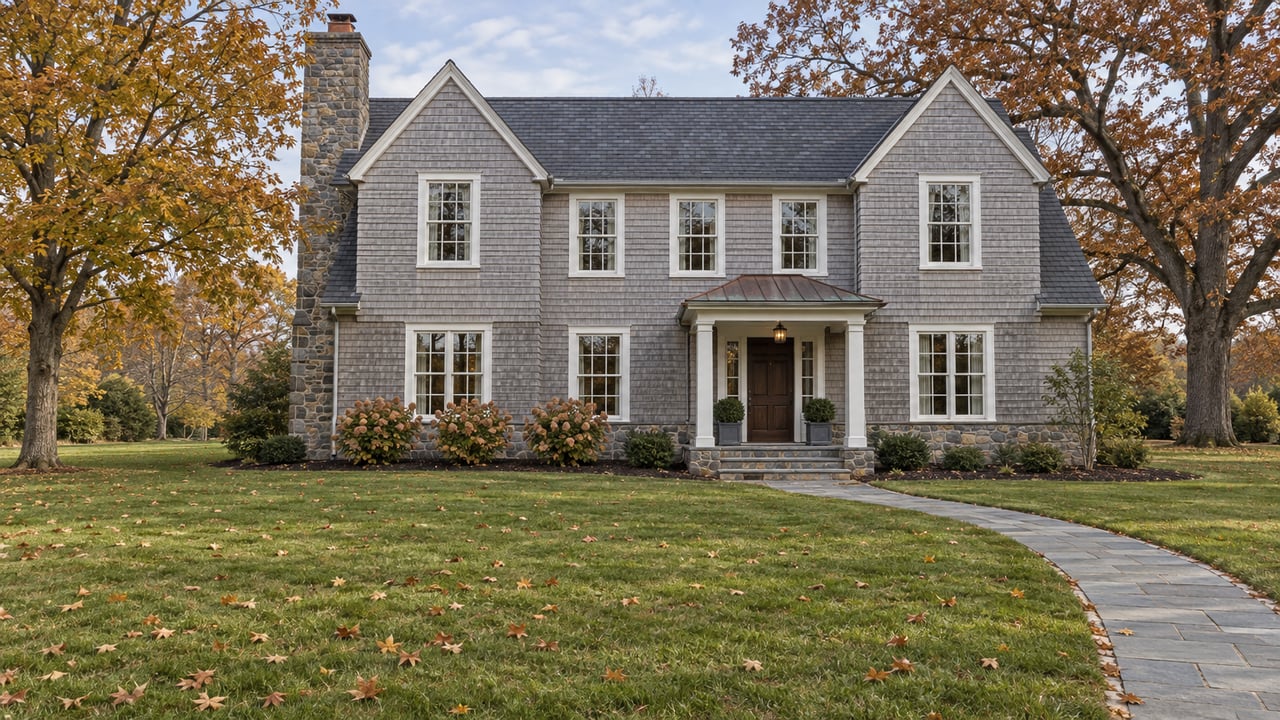
In practical terms, Concord buyers will see more Colonials, renovated older homes, and other classic New England styles than true modern inventory. That reflects the town’s housing stock and gives the market a very different feel from areas with larger numbers of recently built homes.
For many buyers, that is part of the appeal. But it also means you may need to weigh charm against renovation level, systems, floor plan, and day-to-day livability.
Niche Styles Can Stand Out
Rare property types, such as true mid-century modern or deck-house-style homes, can draw attention because they are uncommon. Still, the current listing mix suggests that condition, location, and functionality matter at least as much as the architectural label.
For resale, a renovated Colonial or well-updated vintage home may appeal to a wider buyer pool. A more niche design can absolutely be compelling, but buyers tend to respond best when the design is distinctive and the updates are thoughtful.
Carrying Costs Matter in a Move-Up Decision
Move-up buyers often focus first on purchase price, which makes sense. But in Concord, carrying costs deserve just as much attention.
The Town of Concord has noted concern around housing price, financing, and the residential tax rate. Its tax-relief report also states that Concord’s average single-family tax bill ranks among the highest in Massachusetts.
That can change the math quickly. A move that seems manageable based on purchase price alone may feel very different once you factor in taxes and the full monthly payment.
Monthly Planning Beats Headline Pricing
If you are trading up, it helps to think in terms of total ownership cost rather than simply asking how much more house you can afford. A disciplined review of taxes, financing, and expected monthly outlay can keep you from stretching into a range that feels comfortable only on paper.
This is especially relevant in a market where inventory is limited and emotions can run high. Clear numbers create better decisions.
A Smart Strategy for Move-Up Buyers
The clearest takeaway is that Concord remains seller-leaning, but not uniformly so. Below $2 million, the market is still fast and supply is scarce. Above roughly $2.5 million, buyers tend to gain more leverage, but only when they stay disciplined about condition, value, and pricing.
That creates a very specific planning challenge if you are both buying and selling. You may need speed and certainty on one side of the move, but patience and selectivity on the other.
Focus on These Priorities
- Get fully pre-approved before you start seriously touring homes
- Decide which features are essential and which are flexible
- Watch price band behavior, not just town-wide headlines
- Evaluate condition and layout as carefully as location
- Budget for taxes and total monthly carrying costs, not only purchase price
- If selling, price and prepare your home carefully from the start
In a market as nuanced as Concord, broad advice is rarely enough. The better approach is to match your strategy to the segment you are actually shopping in and the timing pressures of your own move.
If you are weighing a move-up purchase in Concord, tailored guidance can make the process far clearer. The team at Levy RE Group brings local knowledge, analytical discipline, and calm negotiation to help you evaluate timing, pricing, and next steps with confidence.
FAQs
What is the current market trend for Concord single-family homes?
- Concord’s single-family market remains supply-constrained, but spring 2026 showed more inventory and a more selective buyer pool, especially in the upper price ranges.
Is the Concord market still competitive for move-up buyers under $2 million?
- Yes. Inventory below $2 million remains especially tight, and several price bands in the February 2026 snapshot were moving in about two days.
Are Concord homes above $2.5 million easier to negotiate?
- They can be more negotiable than lower-priced segments because buyers tend to be more selective about condition, finish level, location, and pricing.
What home styles are most common in Concord single-family listings?
- Visible inventory appears to lean toward vintage, Colonial, and other traditional homes, with fewer contemporary and mid-century modern options.
Why should Concord move-up buyers think about carrying costs?
- Purchase price is only part of the equation. Concord’s average single-family tax bill ranks among the highest in Massachusetts, which can significantly affect your monthly ownership cost.
How should a Concord homeowner prepare to sell before moving up?
- In this market, thoughtful pricing, strong presentation, and realistic expectations matter, especially for homes above $2.5 million where buyers are more price-sensitive.