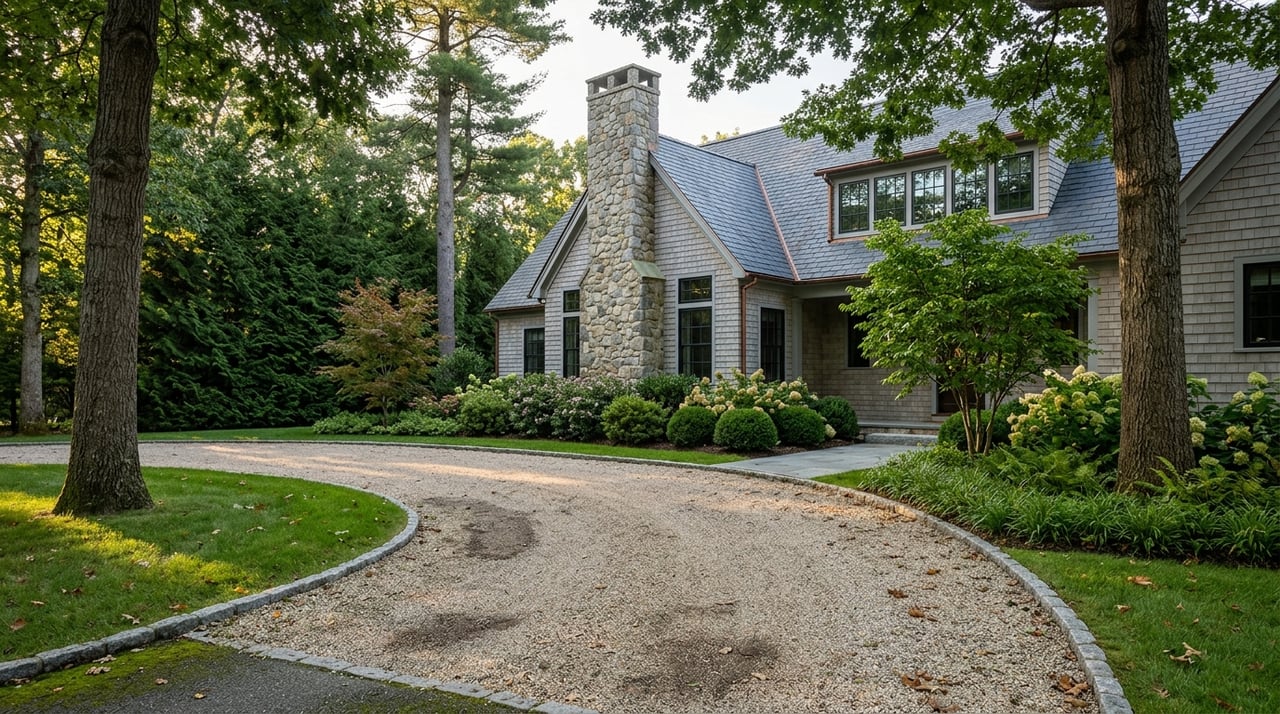
If you are looking for privacy, land, and a home that feels tucked away without feeling disconnected, Weston stands out for a reason. Buyers are often drawn here by more than square footage alone. They are responding to a rare mix of estate history, protected landscape, architectural variety, and access to Greater Boston. Let’s take a closer look at what makes Weston’s private country estates so appealing.
Weston’s Country Estate Identity
Weston’s appeal is deeply tied to its history. The town notes that it was a rural farming community through the 17th and 18th centuries, and by 1900 it had become a favored place for wealthy Boston financiers and industrialists to build large country estates. That legacy still shapes how the town looks and feels today.
You can see that history in the mix of mansions, older cottages, and later 20th-century homes spread throughout town. Rather than one single historic center, Weston has multiple areas where estate-era character still comes through. For buyers, that creates a broader sense of place across the community.
A Landscape That Still Feels Preserved
Weston’s rural character is not accidental. The town describes a landscape of wooded surroundings, narrow winding roads dating back to the 18th century, stone walls, natural vegetation, and mature trees that help buffer homes from the street. That pattern gives many properties a sense of separation and calm.
For estate buyers, that setting matters as much as the house itself. Privacy often comes from the land, the tree cover, and the road layout as much as from lot lines. In Weston, those features are part of the town’s identity.
The Estate Legacy Still Shows
The Case Estates area offers one of the clearest examples of Weston’s estate heritage. According to the town, the James Case estate is among the most complete remaining Weston summer estates, and Marian Case’s holdings reached 105 acres by 1920. The area still preserves open farm fields and woodlands tied to Weston’s rural past.
That kind of continuity is part of what buyers find compelling. Weston offers more than large homes on large lots. It offers a setting shaped by a long estate tradition, which can be difficult to replicate in a more typical suburban market.
Low-Density Zoning Supports Privacy
One of the biggest reasons Weston feels estate-oriented is its zoning framework. In the town’s single-family Residence Districts A through D, minimum lot sizes are 60,000, 40,000, 30,000, and 20,000 square feet. Those standards create a low-density baseline across much of the community.
The town’s 3A materials also state that most residential properties in Weston are in these districts, where a single-family home is the only by-right use. While those figures are minimums rather than typical lot averages, they help explain why Weston often feels spacious and visually open. For buyers, that translates into breathing room.
Space Is Built Into the Town Pattern
In many towns, privacy depends on finding one exceptional parcel. In Weston, a sense of space is more broadly woven into the residential pattern. Substantial frontage and setback requirements support that feeling and help homes sit farther apart.
This matters for buyers who value a quieter setting or a more secluded arrival experience. A long driveway, mature screening, and distance from neighboring homes often feel more achievable in a town where the zoning already leans toward lower density.
Larger Homes Face Added Review
Weston also has site plan approval rules that can affect larger homes and additions. For residences permitted after October 1998, site plan approval is triggered when a home exceeds 3,500 square feet and 10 percent of lot area, or exceeds 6,000 square feet regardless of lot size. Houses on Scenic Roads also require site plan approval.
For buyers, this helps explain why Weston’s larger homes often feel more visually in sync with their surroundings. These review layers are part of the town’s effort to preserve rural character. That can be reassuring if you value long-term setting and compatibility, not just the house next door today.
Architectural Variety Adds Depth
Weston offers a broad range of architectural styles. The town identifies Colonial, Colonial Revival, Federal, Greek Revival, Italianate, Queen Anne, Shingle Style, Tudor, Four-Square, Bungalow, and International Style among the homes found here. That mix reflects different eras of growth, from early farmhouses to estate-era houses and later suburban homes.
For buyers, this variety makes the search more interesting. Weston is not a one-style market. You may find a classic New England profile on one property and a distinctly different architectural expression on another, all within the same town.
Shingle Style and Estate Appeal
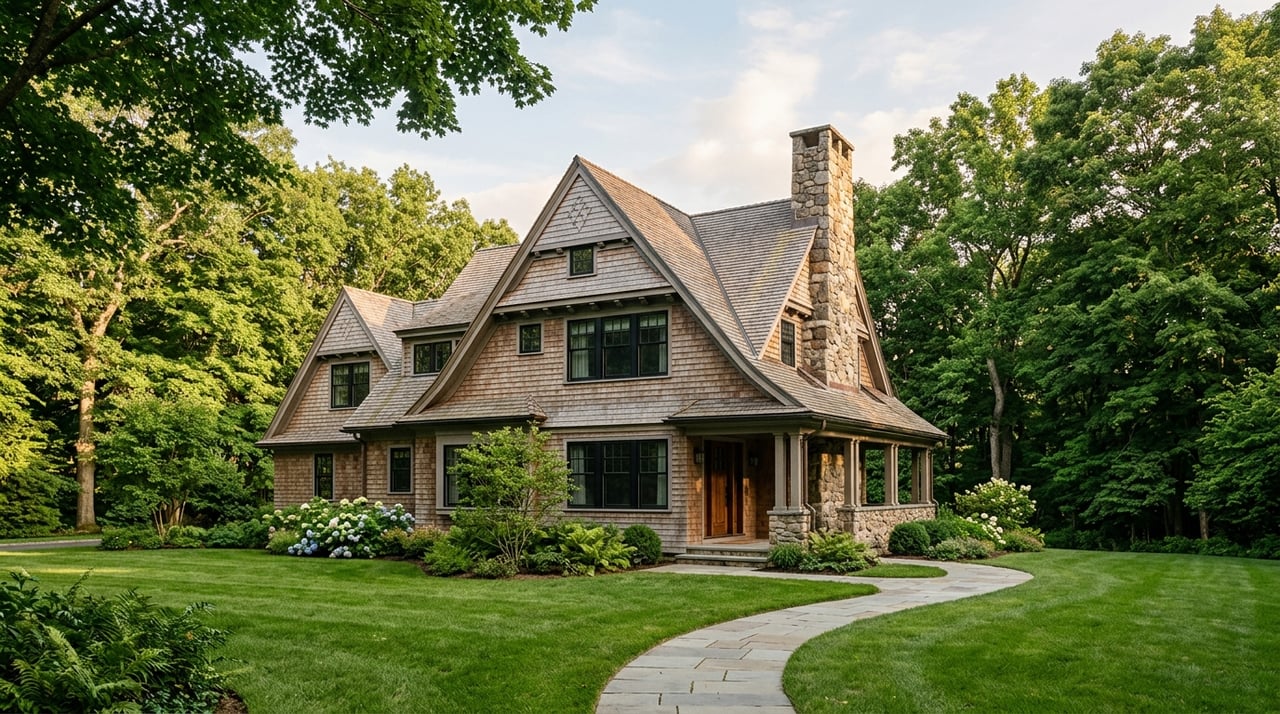
Shingle Style has a special connection to Weston’s estate story. The town’s architectural guidance describes it as an architect-driven style associated with coastal and resort settings, and the historical narrative notes that the James Case House was a Shingle Style estate house designed by Ernest Boyden. It was once considered among the three most expensive houses in Weston.
That history adds a layer of prestige and design significance to the town’s housing stock. Even for buyers who are not seeking a historic home specifically, the presence of architecturally distinctive estate-era properties helps shape Weston’s overall identity.
Historic Character Across Multiple Areas
Weston’s Historical Commission identifies 14 historic areas documented for their architectural resources or character. That is important because it shows the town’s visual appeal is spread across multiple pockets rather than concentrated in one small district. Buyers can experience that sense of character in different parts of town.
This also means estate appeal in Weston is not only about one landmark property or one road. It is part of a wider town fabric that blends history, architecture, and landscape in a more layered way.
Open Space Strengthens the Lifestyle
Private land is only part of the story in Weston. The broader network of open space adds to the experience of living here. The town says the Conservation Commission owns and maintains about 1,800 acres of protected land along with about 90 miles of trails, fire roads, and outlooks open for passive recreation.
That is a meaningful advantage for buyers who want a country feel beyond their own property lines. Protected land helps reinforce the sense that Weston’s landscape is larger than any one parcel. It also supports outdoor access in everyday life.
A Wider Green Landscape
Weston’s open space plan describes a green infrastructure that includes conservation land, trails, working farms and forests, wildlife habitat, streams and ponds, parks, playing fields and courts, and swimming facilities. This helps explain why the town feels so distinct in a regional context. The landscape is not only scenic, but also intentionally protected and used.
For buyers, that creates a fuller lifestyle picture. You are not only buying a home with land. You are buying into a town setting where open space remains part of the experience.
Recreation Close to Home
Weston also offers active recreation options that complement its quieter residential feel. The town says there are 13 athletic fields, 15 tennis courts, 4 basketball courts, and the Weston Memorial Pool, which is described as 20,000 square feet and 700,000 gallons.
The trail network adds even more flexibility. The town notes that three miles of the Mass Central Rail Trail run through the north side of Weston, and the Bay Circuit Trail intersects the rail trail near the Wayland town line. For many buyers, that blend of privacy at home and recreation nearby is a major draw.
Access to Boston Matters Too
A country estate setting works best for many buyers when it still offers practical regional access. Weston’s transportation page places the town within Greater Boston and lists major highways including Routes 30, 117, and 128/I-95, U.S. 20, and the Massachusetts Turnpike. That network helps connect Weston to surrounding employment, services, and city destinations.
The town also states that there is currently no bus service in Weston. For rail travel, a June 2025 town workshop slide indicated that Kendal Green is the only active commuter rail station in town. Buyers who value both privacy and connection often see this balance as one of Weston’s strongest advantages.
Why Buyers Keep Returning to Weston
What draws buyers to Weston’s private country estates is not one single feature. It is the combination of estate-era roots, wooded roads, lower-density zoning, architectural depth, protected open space, and workable Boston access. Few communities bring those elements together in quite the same way.
For some buyers, the appeal starts with privacy. For others, it begins with land, design, or the town’s historic feel. In the end, Weston tends to resonate with people who want a home that feels both substantial and quiet, with a setting that supports long-term value and everyday enjoyment.
If you are considering Weston and want thoughtful guidance on how specific properties, streets, and settings compare, Levy RE Group offers discreet, research-driven advice tailored to your goals.
FAQs
Why do Weston homes often feel more private than homes in nearby towns?
- Weston’s residential zoning includes large minimum lot sizes, substantial frontage and setback requirements, and a wooded landscape pattern with mature trees and winding roads that help buffer homes from one another.
What makes Weston appealing to estate buyers specifically?
- Weston combines a long estate-era history, low-density single-family zoning, preserved rural character, architectural variety, and extensive open space, which together create a strong estate-market identity.
What architectural styles can you find in Weston?
- The town identifies styles including Colonial, Colonial Revival, Federal, Greek Revival, Italianate, Queen Anne, Shingle Style, Tudor, Four-Square, Bungalow, and International Style.
How does open space add value to living in Weston?
- Weston includes about 1,800 acres of protected conservation land and about 90 miles of trails, plus parks, fields, forests, ponds, and other recreational resources that support the town’s country setting.
What transportation access should Weston buyers know about?
- Weston has access to major highways including Routes 30, 117, 128/I-95, U.S. 20, and the Massachusetts Turnpike, and town materials indicate Kendal Green is the only active commuter rail station in town.
Do Weston regulations affect very large homes?
- Yes. Weston requires site plan approval for certain larger residences and for houses on Scenic Roads, which helps support visual compatibility with the town’s rural character.