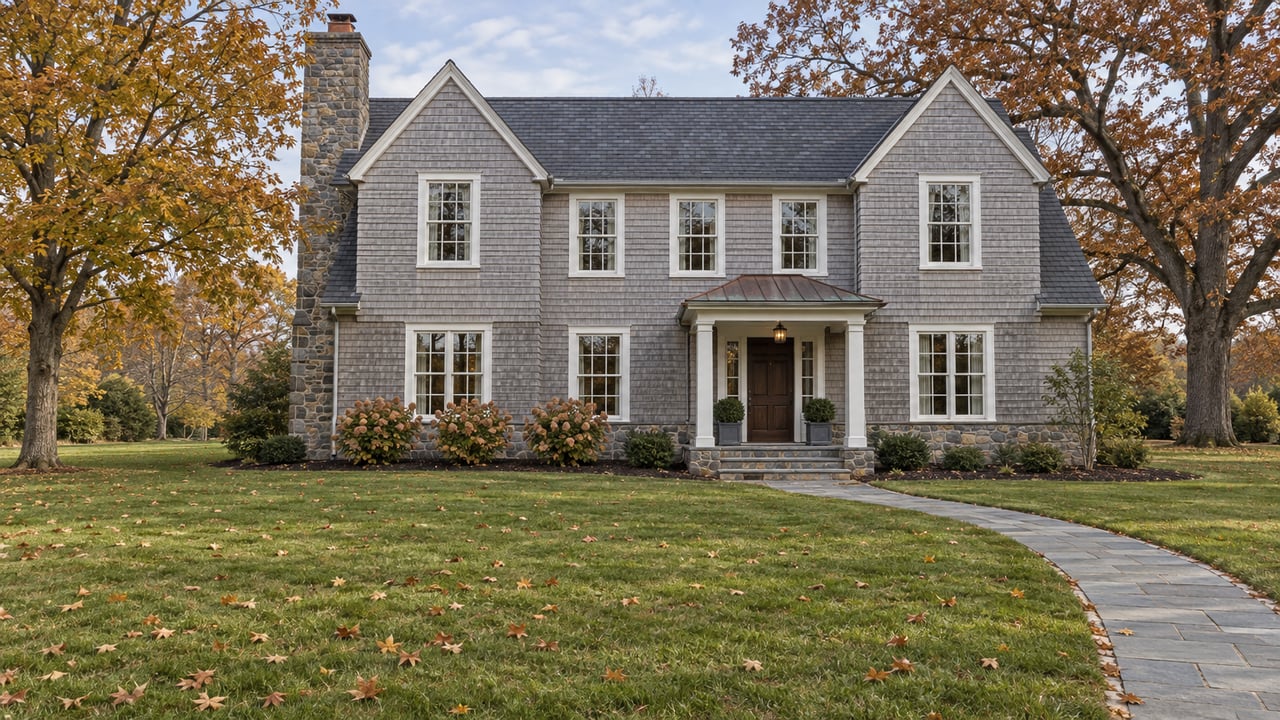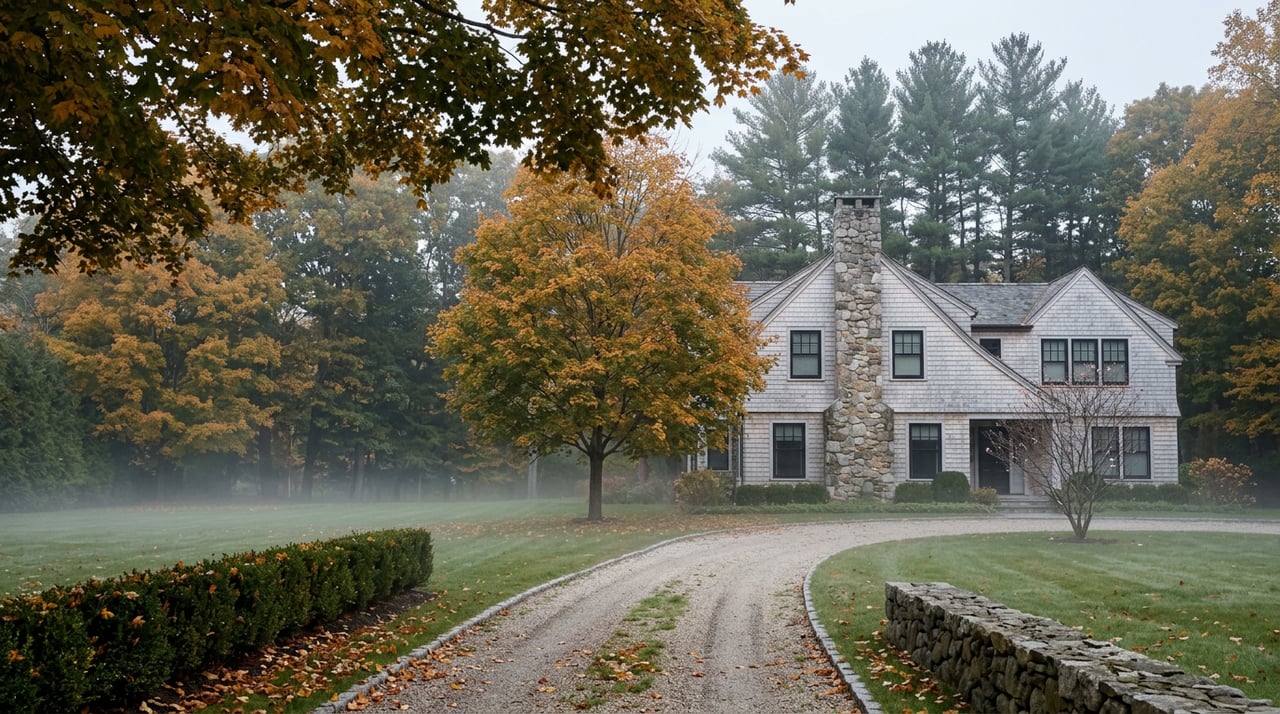
A buyer touring Weston this fall might do the math the way anyone would: more acreage, more land value, more room for a bigger house. It is the assumption almost every MetroWest buyer arrives with, and in most towns it holds up well enough. In Weston, it stops holding up at a specific, calculable point, and that point matters more than the median price anyone quotes you.
Weston controls new construction and full replacement homes through a formula called Residential Gross Floor Area, or RGFA. Under Weston's zoning by-law, a new or replacement single-family home cannot exceed the greater of 3,500 square feet or 10 percent of the lot's area by right, and the by-right RGFA cap is 6,000 square feet. Once the 10 percent allowance exceeds 3,500 square feet, more land buys you more allowable square footage. Above roughly 1.4 acres, it doesn't. The ceiling is fixed.
The Point Where Land Stops Buying House
Run the math across a range of lot sizes and the pattern shows up clearly.
| Lot size | 10% RGFA allowance | By-right cap applied |
|---|---|---|
| 0.5 acre | 2,178 sq ft | 3,500 sq ft (floor) |
| 1 acre | 4,356 sq ft | 4,356 sq ft |
| 1.38 acres | Just over 6,000 sq ft | 6,000 sq ft (ceiling reached) |
| 2 acres | 8,712 sq ft | 6,000 sq ft (capped) |
| 3 acres | 13,068 sq ft | 6,000 sq ft (capped) |
A buyer moving from a half-acre to a full acre gains real by-right building envelope. A buyer moving from two acres to three gains nothing under the formula. The extra acreage still costs money. It just isn't converting into square footage anymore.
This is the detail that separates Weston from towns where lot size and house size scale together in a straight line. It also explains something buyers often notice but can't quite name: why a modest 4,500-square-foot home on three private acres can share a price range with a 6,000-square-foot home on 1.5 acres. Past the ceiling, the extra land is selling privacy, setback distance, and tree buffer. It isn't selling more house.
What This Changes When You're Comparing Weston to Wellesley or Newton
If you're cross-shopping Weston against a town with looser floor-area rules or smaller minimum lots, the comparison isn't just price per square foot. It's what a given dollar amount is actually allowed to become.
Mayflower Venture Partners says Weston's zoning also sets minimum lot sizes of roughly one acre across much of the town, with two-acre minimums in significant sections. Pair that with the RGFA ceiling and you get a market where land beyond the formula's breakeven point functions less like buildable inventory and more like a durable amenity. Teardown land in Weston has recently traded in the high six figures for lots just over an acre, land whose main value, once you're past 1.4 acres, is the privacy and setback it locks in rather than the square footage it unlocks.
For a buyer comparing towns on a spreadsheet, that reframes the question. In a town without a hard RGFA ceiling, paying up for a bigger lot is a fairly direct trade for a bigger house. In Weston, past a certain size, you're paying for something the formula won't let you convert into floor area without asking the town's permission first.
The Permission You Need to Go Bigger
Asking the town's permission is a real step, not a formality. A new or replacement single-family home in Weston that wants to exceed the by-right RGFA needs Planning Board review, and the Town of Weston lists a review fee of $4,000, a filing fee of $300, and an advertising fee of $50 for the application, payable in separate checks made out to the Town of Weston.
That's rarely the only board involved. About one-sixth of Weston sits within regulated wetlands and floodplain areas, which means work near those resource areas triggers Conservation Commission review, typically a public hearing within 21 days of a complete filing and an Order of Conditions issued about 21 days after the hearing closes. Nearly all Weston homes run on private septic, so a size increase usually means a parallel Title 5 review through the Board of Health, and lots inside the Cambridge Water Supply Zone face stricter septic standards on top of that. If the lot has an existing nonconformity, the Zoning Board of Appeals enters the picture too.
Stacked together, a full teardown and custom rebuild that needs both Conservation and Planning Board sign-off typically runs six to 18 months of design and permitting before a shovel goes into the ground. A straightforward replacement that stays inside the by-right RGFA and clear of wetlands buffers can move considerably faster. The gap between those two timelines is the real cost of wanting to build past the ceiling, and it rarely shows up in a listing description.
Weston's Board of Appeals records some of this in plain numbers. Weston's Zoning Board of Appeals records a past case in which a home carried an RGFA of 4,832 square feet on its lot, about 7.8 percent of the parcel, and a proposed 210-square-foot addition would have pushed it to 5,042 square feet, or 8.1 percent, still under the ceiling. That kind of arithmetic, not the listing photos, decides what's actually possible on a given lot.
What the Current Price Range Is Actually Measuring
Weston's 2025 sales, as reported in the Weston Observer's market recap, closed at a median of $2.3 million across 167 transactions, with 15 sales above $5 million and a single top sale of $14.3 million. That spread, a $2.3 million median next to a $14.3 million ceiling, isn't really a story about square footage. Given the RGFA cap, most of those homes above roughly 1.4 acres share the same by-right upper limit on floor area. What separates a $2.5 million sale from a $9 million sale in Weston is far more often the lot itself, how much privacy it buys, how far the house sits from the road, whether it already used a special permit to exceed the standard ceiling, and how much of the RGFA envelope the current structure has already claimed.
More recent data points in the same direction. Over the three months ending in July 2026, the town's median sale price ran near $2.7 million at roughly $541 per square foot. By September 2026, list-price snapshots showed a median closer to $3.24 million at $552 per square foot, a gap between listed and closed pricing that's typical in a market where inventory stays thin and well-positioned homes move before the full slate of buyers ever tours them.
None of those figures tell you what you can build. Only the RGFA math does that.
Before You Write an Offer
If you're comparing a Weston lot to something in a neighboring town, the useful question isn't "how much house does this price buy." It's whether the lot is under or over the 1.4-acre breakeven point, whether the existing structure has already used most of its by-right RGFA, and whether a wetlands buffer or septic constraint sits between the current footprint and the one you have in mind. Those three answers, not the median price, determine whether your timeline is measured in weeks or in months.
This is the kind of question that rewards a second set of eyes before you're under contract. Patty, David, and Will at Levy RE Group pair local read on a specific lot with the kind of underwriting discipline David's CFA and MAI background brings to any property that's being evaluated as both a home and an asset. If you're weighing a Weston property against something in Lincoln, Lexington, or Wellesley, that's the conversation worth having first.
Reach out to Levy RE Group before you get attached to a number that the zoning by-law may not let you build.
This article is general information, not legal, tax or financial advice. Consult a qualified professional about your situation.