If you are thinking about buying in Lincoln, it helps to know this is not just another high-priced suburban market. Lincoln stands apart because land use, conservation, architecture, and limited inventory all shape what you can buy and how you should evaluate it. If you understand those local dynamics upfront, you can search more confidently, avoid costly assumptions, and make stronger decisions when the right home appears. Let’s dive in.
Lincoln starts with conservation
In Lincoln, the setting is part of the value. The town describes its rural character as the result of protecting large contiguous farms and historic agricultural use, and the Conservation Department manages 1,600 acres of municipal conservation land.
That conservation presence is felt throughout the market. Lincoln also has roughly 80 miles of trails across 2,400 acres of conservation land and private property, which helps explain why so many homes feel closely tied to the landscape around them.
For you as a buyer, that means the land itself deserves as much attention as the house. You are not only comparing floor plans and finishes. You are also looking at topography, privacy, buffers, and how much of the lot is actually usable.
Large lots do not always mean flexibility
A common mistake in Lincoln is assuming that a large parcel automatically offers broad development options. In practice, Lincoln’s zoning and land rules can make a property far more constrained than it first appears.
In the town’s standard R-1 single-residence district, the minimum lot area is 80,000 square feet. The minimum street frontage is 120 feet, the minimum lot width is 250 feet, and the minimum front, side, and rear yard setback is 50 feet for a residential principal structure.
Those standards are larger than what many buyers expect in suburban Massachusetts. They help explain why Lincoln often feels more spacious, lower density, and slower to change than nearby towns.
Why usable land matters
Even when a lot looks substantial on paper, the buildable area may be reduced by frontage rules, lot shape, setbacks, wetlands buffers, and other site conditions. This is one reason Lincoln rewards careful due diligence.
The town’s Conservation Commission also has wetlands jurisdiction within 100 feet of wetlands and 200 feet of perennial streams. If you are considering an addition, site work, or a more substantial rebuild, those review thresholds may matter in a major way.
Cluster development has limits
Lincoln does allow cluster development by special permit, but the rules are structured around permanent open space. At least 35% of the tract must remain open land, and that land must be owned by the town, the Lincoln Land Conservation Trust, or an approved owners’ association with a permanent conservation restriction.
That is another reason you should be cautious about making assumptions based on lot size alone. In Lincoln, preservation goals are built into the way land can be used.
Lincoln has a distinct housing identity
Lincoln is not defined only by lot size and land protection. It also has a recognizable architectural character that can shape both your search and your renovation plans.
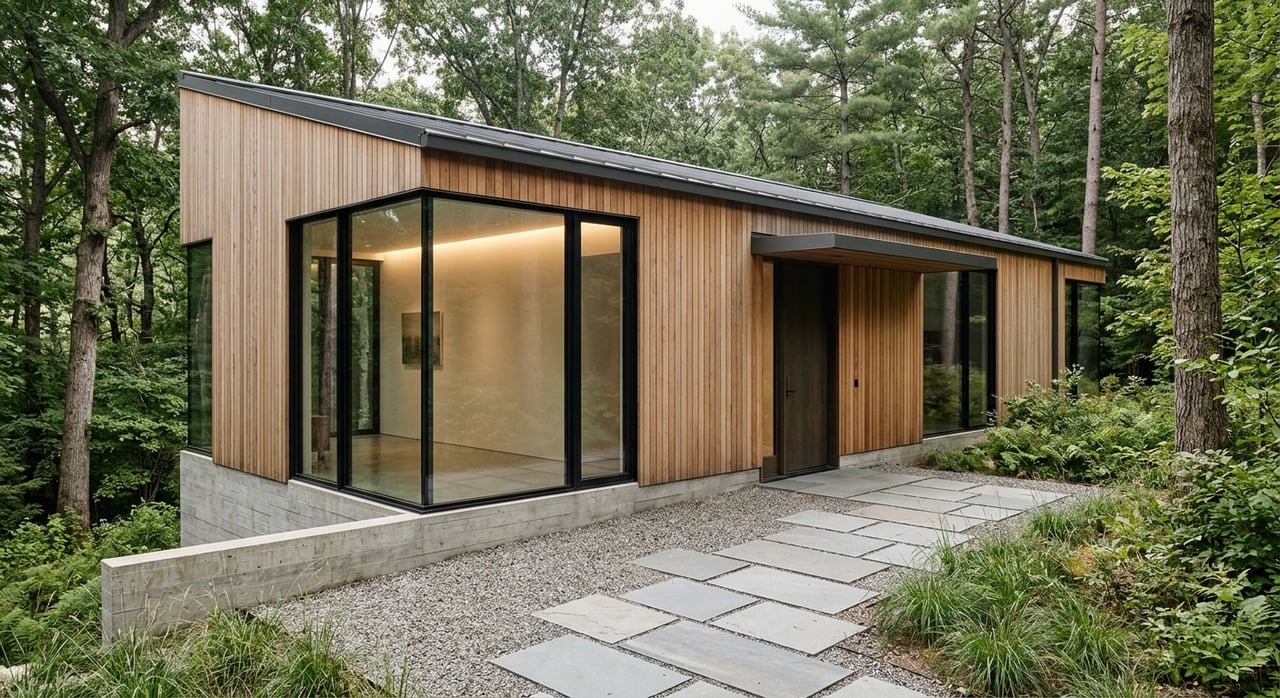
One of the clearest features of the town’s housing stock is its Modernist legacy. Lincoln’s historic-district study notes that more than 300 Modern residences were built in town between the 1930s and 1970s.
That matters because many homes were designed to fit into wooded settings rather than dominate them. If you are drawn to design, Lincoln can offer a style and setting combination that is unusual even within greater Boston’s higher-end suburbs.
Historic homes may involve added review
Lincoln also includes older historic properties and districts. The Lincoln Historic District Commission reviews exterior alterations visible from a public way, along with demolitions within historic districts.
If you are buying a historically significant home, renovation flexibility may be more limited than in areas without design-review oversight. That does not make these homes less appealing, but it does mean you should understand the review process before you plan major exterior changes.
Housing mix offers useful context
A regional housing assessment describes Lincoln’s housing stock as 78% single-family homes, 13% two- to four-family buildings, and 8.5% buildings with five or more units. The same report notes that 15% of units were built before 1939, 24% from 1940 to 1959, 30% from 1960 to 1979, 10% during the 1980s and 1990s, and approximately 21% since 2000.
Because that assessment is older, it is best viewed as background rather than a live market snapshot. Still, it supports the broader picture of Lincoln as a town where single-family homes and mid-20th-century housing patterns play a large role.
Inventory is limited and timing matters
Lincoln’s distinct physical character is only part of the story. The market also tends to have very limited supply, which can shape your timeline and your offer strategy.
Recent portal snapshots all point in the same direction. Zillow reported 20 for-sale listings in Lincoln with a median list price of $2,125,667 as of May 31, 2026, while Realtor.com reported 18 active listings, a 16-day median on market, and a 100% sales-to-list-price ratio. Redfin described Lincoln in May 2026 as very competitive, with homes selling in about 22 days, many receiving multiple offers, and average sales about 2% above list.
The exact counts vary by platform and refresh cycle, but the overall message is consistent. Lincoln is a tight, premium market where appealing homes can move quickly.
What this means for your search
In a market with thin inventory, your search timeline may depend more on new listings than on how actively you are looking. Even highly prepared buyers may need patience while waiting for the right property to come to market.
That is why it helps to separate must-haves from nice-to-haves early. In Lincoln, flexibility on layout, finishes, or style can sometimes open doors when inventory is sparse.
What this means for your offer strategy
Preparation matters before you start touring seriously. In a competitive market, it is wise to have financing and pre-approval fully lined up so you can move decisively.
When the right home appears, a clean offer, realistic pricing expectations, and quick response time can make a meaningful difference. In Lincoln, strong execution often matters just as much as enthusiasm.
Why Lincoln feels different from nearby towns
Many buyers first notice Lincoln because of pricing, but price alone does not explain the market. What truly makes Lincoln distinct is the layering of limited inventory with environmental review, historic oversight in some areas, large-lot zoning, and a strong design identity.
That combination affects how you should evaluate almost every property. A house here is rarely just a house. It is also a site, a setting, and in some cases a design asset with rules and constraints that deserve close attention.
For some buyers, that complexity is exactly the appeal. If you value privacy, landscape, architectural character, and a more conservation-minded town structure, Lincoln offers a very particular kind of market experience.
How to buy more confidently in Lincoln
A disciplined approach can help you navigate Lincoln more effectively. The goal is not to move faster for the sake of speed. The goal is to be ready when the right opportunity appears and informed enough to assess it clearly.
Here are a few practical ways to approach your search:
- Define your top priorities before inventory appears.
- Evaluate the lot as carefully as the house.
- Ask early about wetlands, setbacks, and site constraints.
- Confirm whether historic-district review may affect exterior plans.
- Stay flexible on cosmetic details if location and land are strong.
- Be prepared for competition when a well-positioned home comes to market.
In a town like Lincoln, local knowledge matters because the questions are often more nuanced than they first seem. A property may be beautiful, but the important next question is how the land, rules, and market conditions affect your long-term fit.
If you are considering a purchase in Lincoln, thoughtful guidance can make the process feel far more manageable. The team at Levy RE Group brings calm advice, analytical depth, and discreet representation to help you evaluate opportunities with clarity.
FAQs
What makes buying a home in Lincoln different from nearby towns?
- Lincoln stands out because conservation land, large-lot zoning, wetlands oversight, historic review in some areas, and limited inventory all shape how properties are valued and how buyers should evaluate them.
What should you know about lot size when buying in Lincoln?
- A large lot does not always mean broad building or expansion options because setbacks, frontage rules, lot width requirements, wetlands buffers, and other site conditions can reduce usable buildable area.
What are Lincoln’s basic R-1 residential lot requirements?
- Lincoln’s standard R-1 rules include a minimum lot area of 80,000 square feet, minimum street frontage of 120 feet, minimum lot width of 250 feet, and 50-foot minimum front, side, and rear yard setbacks for a residential principal structure.
Can you renovate freely after buying a home in Lincoln?
- Not always, because exterior changes visible from a public way may be reviewed within historic districts, and wetlands jurisdiction can also affect additions, site work, or rebuild plans.
How competitive is the Lincoln housing market for buyers?
- Recent market snapshots show very limited inventory, short time on market, and pricing that can meet or exceed list price, which points to a competitive environment for well-positioned homes.
How long can a home search take in Lincoln?
- In Lincoln, your timeline may depend heavily on when suitable new listings appear because the number of active homes for sale is often quite small.