If you are pricing a Back Bay condo right now, the market is not asking for guesswork. It is asking for discipline. In a neighborhood where buyers expect quality and know how to compare options, the right list price can shape both your timeline and your final result. This guide will help you understand what matters most when pricing a condo in Back Bay today and how to think about value with more precision. Let’s dive in.
Back Bay pricing rewards accuracy
Back Bay remains one of Boston’s premium condo markets, but current data suggest sellers need a realistic starting point. Public market reports show active inventory, moderate marketing times, and room for negotiation rather than a rush of bidding wars on every listing.
Redfin shows 112 condos for sale in Back Bay, with a median listing price of $1.69 million, about 46 days on market, and roughly one offer per home. Realtor.com reports 151 homes for sale, a median listing price of $2.179 million, a 96% sale-to-list ratio, and 41 median days on market, while labeling the area a balanced market. The Massachusetts Association of Realtors reports a year-to-date median sales price of $1.51 million, 129 units of inventory, 104 cumulative days on market, and 94.2% of original list price received.
These numbers are not measured the same way, so they should not be compared line for line. Still, they point in the same direction: buyers are active, but they are selective, and they are not rewarding overly ambitious pricing.
Why overpricing can cost you
In today’s Back Bay market, a condo that misses the mark on price can lose momentum quickly. Realtor.com reports that homes sold for 4.04% below asking on average in March 2026, which suggests that negotiation remains common.
That matters because buyers in Back Bay often have clear expectations around condition, layout, building quality, and monthly costs. If your condo comes to market above what recent comparable sales support, buyers may pass it over, wait for a reduction, or use the mismatch as leverage in negotiations.
A premium neighborhood does not erase pricing discipline. In fact, it often makes precision even more important.
Micro-location matters in Back Bay
Back Bay is not one uniform pricing zone. Sub-neighborhood data from Realtor.com show meaningful price differences within the area, which means your condo’s location inside Back Bay can influence value just as much as the neighborhood name itself.
For example, Back Bay East shows a median listing price of $2.674 million and $1,564 per square foot. Back Bay West shows a median listing price of $1.68 million and $1,323 per square foot, while Columbus and Prudential-St. Botolph fall somewhere in between.
For sellers, the takeaway is simple: you should not price your condo based on a broad Back Bay average alone. The strongest pricing analysis starts with your immediate setting, including the block, the building type, and the nearby inventory buyers are likely to compare against your home.
Building character affects condo value
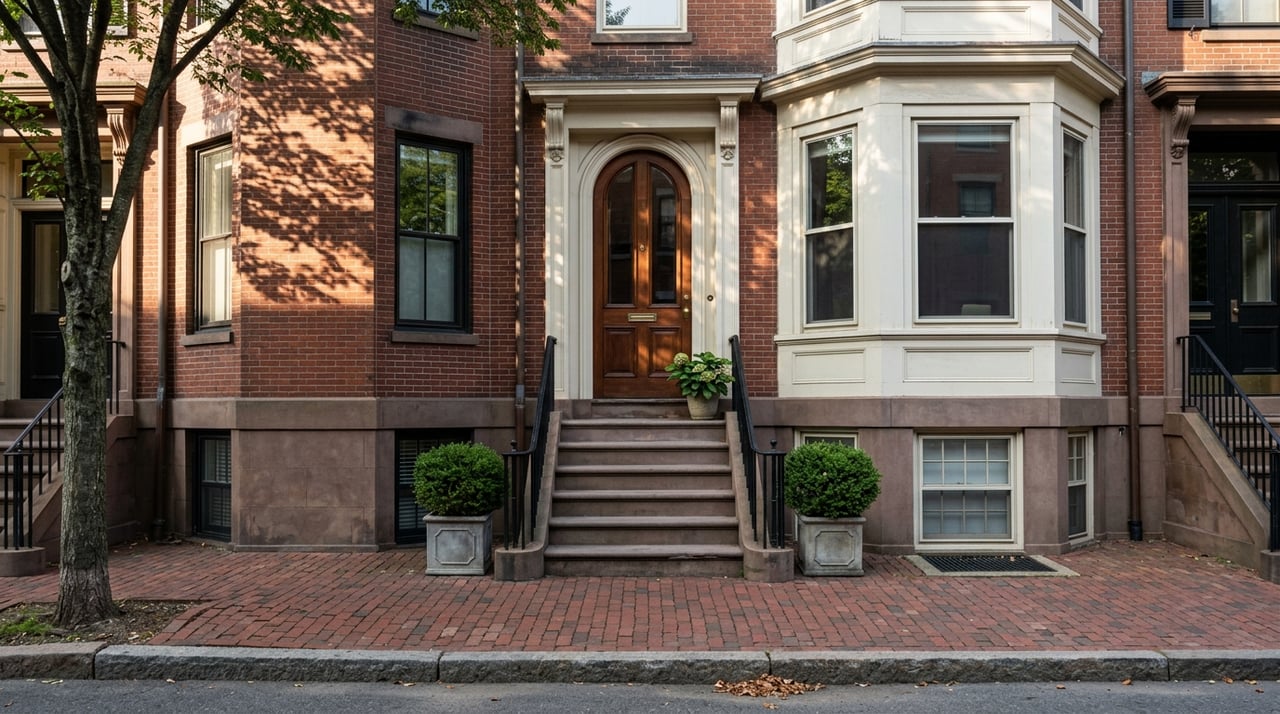
Back Bay’s physical character plays a major role in pricing. Boston Planning describes the neighborhood as a historic district built on filled tidal marshes, with Victorian row houses along Beacon, Marlborough, and Commonwealth and major commercial corridors along Newbury, Boylston, St. James, and Huntington.
That setting shapes buyer expectations. In many Back Bay properties, value is tied not only to square footage but also to details like façade quality, architectural consistency, and how well the unit fits the building’s original character or thoughtful modernization.
The Back Bay Architectural District was established in 1966, and its rules continue to influence exterior changes. Because the district aims to preserve historic character and stabilize residential property values, exterior work often involves added review and a more careful process than in a typical condo market.
Historic district rules influence price
If your condo includes exterior upgrades, documentation matters. The Back Bay Architectural Commission requires approval before exterior work begins, and for condominium buildings, the guidance notes that the building is considered as a whole and treated uniformly when changes are proposed.
This has practical pricing implications. A finished and approved balcony, terrace, roof deck, or exterior improvement is generally more valuable than an idea that has not yet been reviewed or completed.
That is especially true in Back Bay, where visible exterior elements like windows, roof forms, and decks can involve more regulatory friction. If you want the market to recognize an improvement, it helps to show that it is real, usable, and properly documented.
What buyers compare beyond size
Square footage still matters, but it is rarely the full story in a Back Bay condo. Fannie Mae’s condo appraisal guidance emphasizes both the project and the unit itself, including amenities, association assessments, and the unit’s location within the project.
In practice, buyers often compare features such as:
- Floor level
- Exposure and natural light
- View corridors
- Elevator access
- Stack or position within the building
- Layout efficiency
- Monthly condo fee burden
- Condition and finish level
That helps explain why two condos with similar size can perform very differently. In a dense, high-expectation market, the better-positioned unit often captures stronger interest even before pricing becomes a discussion.
Renovation quality can change the outcome
Many sellers assume that any renovation will increase value. The reality is more nuanced. Fannie Mae distinguishes between updated and remodeled spaces, and notes that unusual layouts can have limited market appeal.
That means your improvements need to be relevant to the local market, well executed, and easy for buyers to understand. A clean, functional renovation with documented updates and a sensible floor plan will usually support pricing better than a highly personalized redesign that narrows the buyer pool.
Condition also matters. Minor wear may not be a major issue if it does not affect safety or soundness, but deferred maintenance or more serious defects can reduce marketability and may affect the final price a buyer is willing to pay.
Outdoor space adds value when it is real
In a dense urban neighborhood, outdoor space often stands out. Buyers tend to value a private terrace, balcony, patio, or roof deck, especially when it is usable and thoughtfully integrated into the home.
But in Back Bay, not all outdoor potential should be priced the same way. Because the historic district has clear rules around exterior visibility and roof deck design, speculative outdoor possibilities should not be treated like completed features.
If your condo has approved outdoor space, that can strengthen your pricing position. If it only has the possibility of future outdoor space, you should be careful about assigning full value before that path is confirmed.
How to price a Back Bay condo wisely
A smart pricing strategy usually starts narrow and then expands only when needed. The best comparable sales are often the closest ones, especially in a market where building differences and block-level context matter so much.
A practical pricing approach looks like this:
- Start with recent closed sales in the same building.
- If needed, compare units in the same line or similar position.
- Expand to the same block or nearby blocks with similar building type.
- Adjust for micro-location, condition, outdoor space, and fees.
- Test your conclusion against current competition and recent market pace.
This approach aligns with appraisal logic and with how real buyers shop. They are not comparing your condo to every property in Boston. They are comparing it to the few alternatives that feel most similar.
Why tax assessments are not enough
Some sellers look at an assessed value and assume it should guide their asking price. In Boston, that can be a mistake. Boston Assessing states clearly that its role is to determine value for taxation.
That makes the assessment useful for verifying basic property facts, but not for setting market price on its own. A strong list price should be based on recent comparable sales, active competition, and how your condo fits today’s buyer expectations.
Back Bay sellers should think in ranges
Because luxury and upper-tier condo markets can have thinner data sets, one standout sale does not always tell the whole story. The Massachusetts Association of Realtors specifically notes that one month of activity can look extreme because of small sample size.
That is why year-to-date trends and a broader comp set are often more reliable than a single flashy result. If you are pricing a Back Bay condo today, you should think in terms of a supported value range, then choose a launch price that reflects your unit’s strengths without ignoring the market’s current negotiation patterns.
The bottom line on pricing today
Back Bay remains highly desirable, with strong architecture, central location, and enduring appeal. Redfin describes it as supremely walkable, with a Walk Score of 97, and Boston Planning places it alongside Downtown and the Public Garden. Those fundamentals support long-term demand.
Still, demand alone does not set price. In today’s market, the condos that perform best are usually the ones priced with discipline from the start, based on the right comps, the right micro-location, and a clear-eyed view of condition, layout, building context, and approved features.
If you are preparing to sell, a measured pricing strategy can protect your momentum and help you compete more effectively from day one. For tailored guidance on pricing, positioning, and presentation in Back Bay, connect with Lincoln Real Estate Advisors.
FAQs
How should you price a condo in Back Bay today?
- You should price it using recent comparable sales, ideally in the same building or a very similar nearby building, while adjusting for condition, layout, fees, outdoor space, and micro-location.
Do Back Bay condos usually sell at asking price?
- Current public data suggest many do not, with Realtor.com reporting homes sold for 4.04% below asking on average in March 2026 and MAR reporting 94.2% of original list price received year to date.
Does a renovation always increase Back Bay condo value?
- No. Renovations can help, but value depends on quality, layout, condition, and how the finished space compares with local comps.
Does outdoor space add value to a Back Bay condo?
- Yes, especially when it is usable, approved, and documented, but speculative outdoor potential should not be valued like a completed feature.
Can you use Boston assessed value to price a Back Bay condo?
- No. Boston Assessing uses valuations for taxation, so assessed value may help confirm property facts but should not determine list price by itself.
Is all of Back Bay one condo market?
- No. Pricing differs across Back Bay East, Back Bay West, Columbus, and Prudential-St. Botolph, so your exact location can significantly affect value.